blog
Formwork Calculation for a Residential Complex: A Real Project Example
09 February 2026
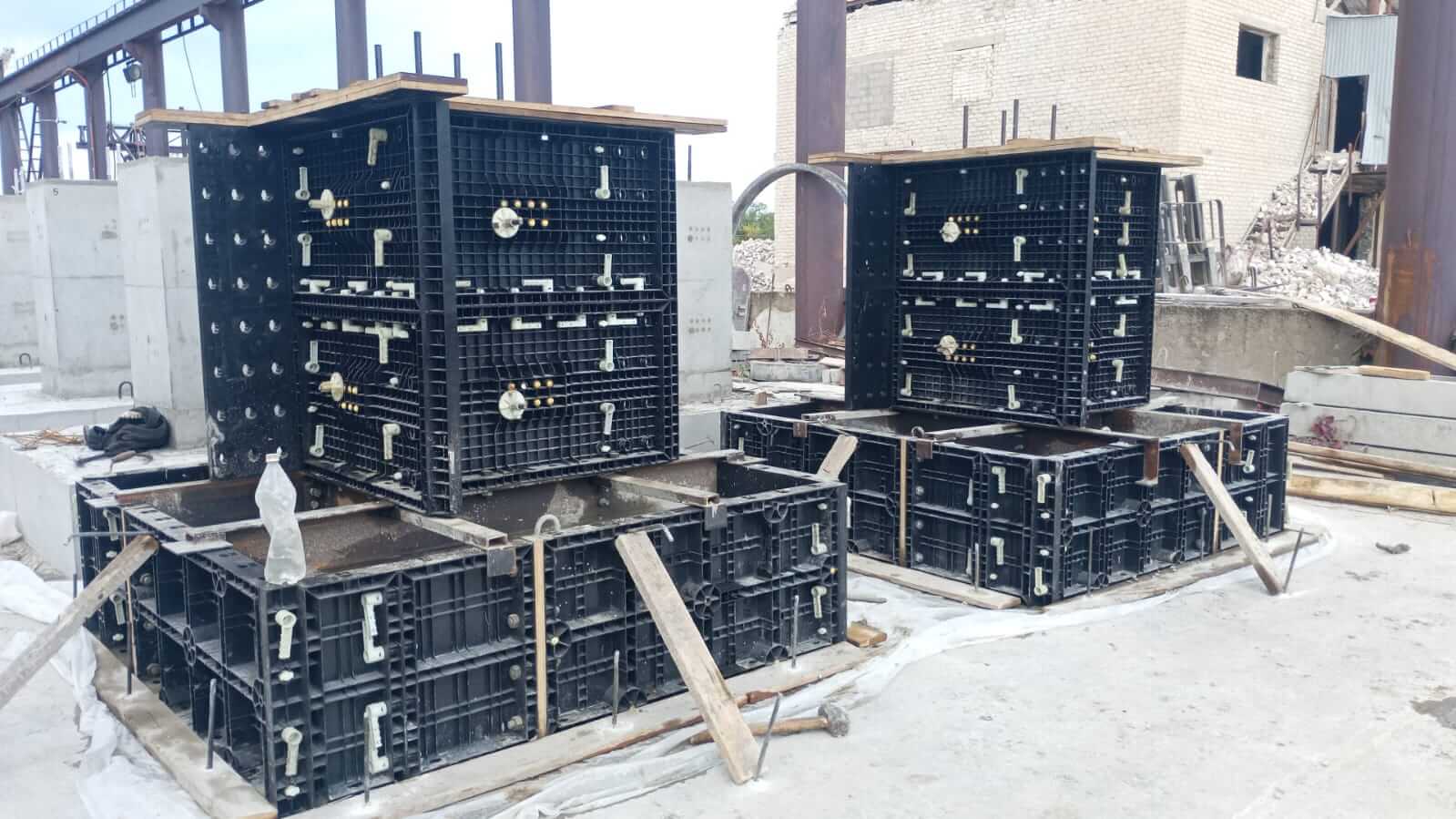
When constructing a residential complex, accurate formwork calculations play a key role in ensuring the project remains on schedule and on budget. Errors at this stage can lead to overspending on materials, equipment downtime, and increased construction costs. This is why engineering calculations are always performed before equipment delivery to the site.
Let’s consider a typical example of a multi-story residential complex in Tashkent with a monolithic frame. The project includes several entrances, a repeating floor plan, and underground parking. The main structural design consists of monolithic walls, columns, and floors.
The first stage of calculation begins with an analysis of the design documentation. Engineers determine the total area of vertical and horizontal structures on a typical floor. Since the layout is repeatable, the optimal formwork set for a single floor can be calculated, taking into account the cyclical nature of the work.
For walls and elevator shafts, a large-panel system is typically used. This system is chosen due to its high installation speed and the ability to cover large areas in a single cycle. The concrete area to be poured in a single stage is determined, after which the required number of panels is calculated, taking into account the floor height and wall configuration.
Next, the formwork for the floor slabs is calculated. Engineers determine the slab thickness, prop spacing, and the required number of beams. The calculation includes the load from fresh concrete, reinforcement, and temporary loads from workers. A safety factor is also factored in to ensure safe conditions on the construction site.
Particular attention is paid to the system’s reusability. In a residential complex with standard floors, the same formwork is used repeatedly. Therefore, the calculation is based not on the entire building area at once, but on the number of sets required for a continuous work cycle. This reduces initial investment and avoids excess equipment.
For example, if the concreting cycle for one floor is seven days, and the floor is dismantled after a certain period of curing, the engineer selects the number of props and panels so that work can proceed concurrently on several levels without interruption.
Components are also included in the calculation: locks, tie bolts, corner pieces, and additional panels. A shortage of even a small number of components can slow down installation and impact construction timelines.
Logistics is a key factor. For a large residential complex, equipment is delivered in stages, in accordance with the construction schedule. This reduces the burden on the warehouse area and simplifies site organization.
The economic component of the calculation includes a comparison of the equipment purchase cost, taking into account its multiple uses. For large-scale projects, a large-panel system demonstrates high efficiency by reducing labor costs and accelerating the construction cycle.
As a result, a properly executed calculation ensures the continuity of the construction process, minimizes costs, and improves safety on site. For residential complexes with standardized architecture, it is especially important to consider the repetition of floors and properly plan the system’s turnover.
Formwork engineering calculations are not a formality, but a strategic project management tool. They help the developer control the budget, meet deadlines, and ensure high-quality monolithic structures at every stage of construction.
 Blogs
Blogs